
The Softness of Men, the Fury of Goddesses
Written by: Adem Çalhanoğlu
Edited by: Thuth Htet San
It starts, I think, with something embarrassingly simple, something so gentle and unguarded it barely survives in a world of permanent outrage and self-branding: I want to be loved. It’s not a demand. Not a cry for help. It’s quieter than that—a persistent murmur beneath the din of politics, identity, and the exhausting labour of being human. And it’s from that murmur, that base note of longing, that I’ve written To Walk Beside a Demon.
It’s a story about divine, furious women and the pathetic men who cross their paths. It’s not an attempt at feminist posturing or a half-baked revenge fantasy. It’s not “girlboss fiction.” Zeynep and Anushka—two of the central characters—aren’t empowered in the Marvel sense. They don’t quip their way through trauma or wear leather in the rain; their strength is raw, spiritual, born of suffering that has reached the point of combustion. They aren’t superpowered; they are symptoms. Manifestations of a rage that is so often silenced, pathologised, mocked. They exist because there are too many women in this world whose pain is politely ignored, bureaucratically explained away, or digitally commodified.
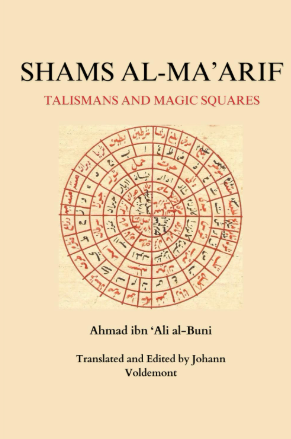
Zeynep’s origin is central to this. She isn’t found; she is summoned. Not with circles and incantations, but from the pages of the infamous grimoire, Shams al-Ma’arif. She is pulled into reality by the sheer, desperate gravity of Ayşe’s loneliness and her silent fury at the world’s injustices. Zeynep is a jinn, a being of smokeless fire and ancient knowledge, but her manifestation is entirely human in its cause. She is the sister Ayşe prayed for without words, the protector she needed but never dared to ask for. She is a consequence given form, a love so fierce it tore a hole in reality to answer a call.
Despite Zeynep’s powers rooting in ancient grimoires, Anushka came later, an addition born from the realisation that power has different textures, different histories. I wanted to explore a fury that wasn't rooted in the Abrahamic or esoteric traditions that birthed Zeynep. Anushka’s power comes from a different wellspring—the divine feminine rage of the Hindu pantheon. She becomes a vessel for Durga, for Kali, for the goddesses who are both creators and destroyers. Her power is a response not just to geopolitical injustice, but to the ancient, insidious violence of casteism. She is the fury of the oppressed rising, a reminder that some gods choose their champions from the very people the world has tried to grind into dust.
The violence they inflict in the story isn’t indiscriminate. It is precise. It is a mirror held to the systemic violence they were shaped by—whether it’s the calculated destruction of Gaza, the casual poison of casteism, or the numbing, ever-present misogyny that shadows women from adolescence onward. Theirs is not violence for entertainment. It’s grief with teeth.
But the character I return to again and again is Ayşe. If Zeynep and Anushka are the storm, Ayşe is the one caught beneath it—trying to make sense of a world where brutality is so normalised that compassion begins to look like naivety. She begins from a place I know all too well: loneliness. Not the kind that comes from being single, or living far from family, but the kind that arrives when the world offers you no language for your pain. She doesn’t ask for a warrior or a goddess. She asks, quietly, for a sister. Someone to stay. Someone to see her.
The power that arrives on her doorstep—Zeynep—is not something she understands. But it’s an answer, of sorts. Her journey is not about becoming powerful, but about understanding what to do when power becomes your responsibility. She’s the human tether to a world spinning wildly between injustice and retribution. Through her, I ask myself questions that keep me up at night. What do you do with righteous anger when it’s finally yours to wield? Can justice exist without cruelty? And what does it mean to hold power ethically, when ethics so often fail those who need them most?

As a male writer, I find myself increasingly uneasy with how men—especially men my age—relate to strength. There is a crisis playing out, not just online but in lecture halls, cafés, WhatsApp groups. A collapse of confidence disguised as swagger. The popularity of figures like Andrew Tate isn’t an accident, it’s a symptom. Something is hollowing out in the male psyche. A desperate desire for structure, certainty, relevance—even love—is being funnelled into a kind of brittle dominance. I see it in the way men joke about their own loneliness, only to weaponise it moments later. I see it in the seduction of faux stoicism. The podcasts about “alpha mindset.” The fear of softness. The contempt for listening.
These men aren’t evil. They’re lost. They are being sold a version of masculinity that is deeply insecure, one that turns vulnerability into weakness and love into currency. Power becomes something to perform, rather than something to protect with. And when that performance collapses, what remains is often anger—at women, at minorities, at anyone who seems to be thriving without them.
I don’t write my characters in opposition to these men. I write them alongside that reality, as a way of making sense of it. Because I, too, have felt that pull. That anxiety of not being enough. That temptation to harden. I’ve just been lucky enough to have an anchor:
my sister.
She’s twenty-four. I’ve seen her heart break more times than I care to count, and I’ve seen her rebuild it each time without losing her sense of self. Through her, I learned what respect really means—not the passive kind that avoids doing harm, but the active kind that requires listening, humility, attention. Because of her, I notice things. I notice the lad who changes his tone when he speaks to the woman cleaning the lecture hall. I notice who interrupts, who listens, who credits women’s ideas as their own. These small moments—they’re everything. They reveal more about a person’s politics than any Instagram infographic ever could.
That’s why, when I write about ideology, I don’t do it abstractly. My rejection of Zionism, of Hindutva chauvinism, of the PKK’s violence, isn’t about ticking boxes. It’s about a common moral thread: the refusal to dehumanise others to feel safe in your own identity. Ayşe’s disgust at the girl drinking Coke while posting about Gaza isn’t pettiness—it’s heartbreak. It’s the exhaustion of watching solidarity become aesthetic, of seeing human suffering turned into branding.

What I’m trying to do, ultimately, is imagine a world that makes moral sense. A world where strength doesn’t mean standing over others. Where anger is proportionate, not compulsive. Where power is held, not flaunted. Where men understand that being feared is not the same as being respected, and that being respected is not the same as being loved.
I write terrifying, powerful, loving women because I need to believe their clarity is possible. And perhaps, by giving them form, by watching them move through the mess of things with fury and grace, I am writing myself toward a different version of masculinity. One that isn’t afraid to say: I want to be loved. And I want to be worthy of it.
That’s the truth under it all. Not a manifesto. Not a condemnation. Just a quiet, persistent hope that there’s still time for a different kind of strength. One rooted in care, in protection, in the will to stop the storm before it becomes a flood.


Amazing. The writing is so captivating and relevant.